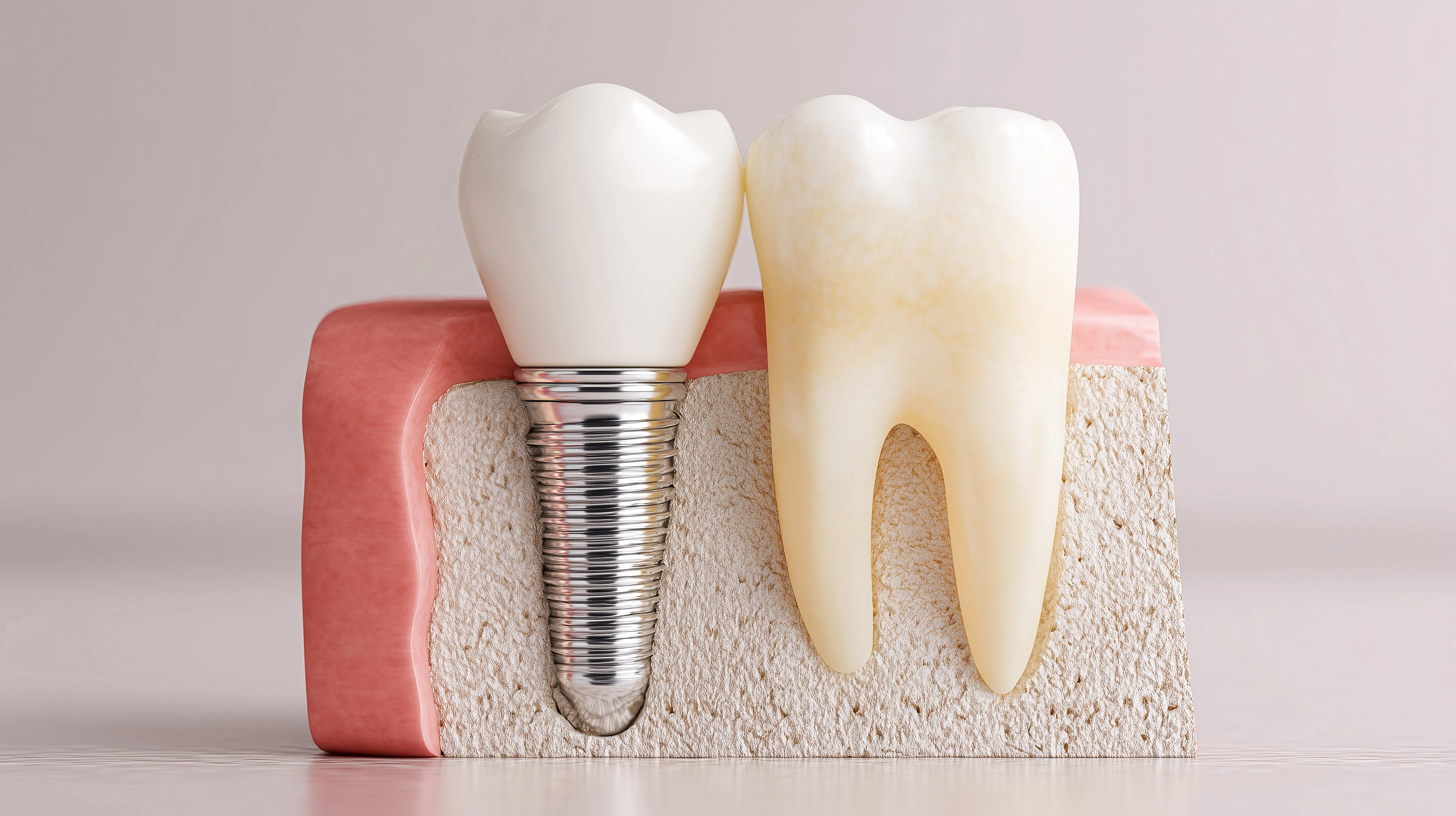



Quick answer: If your crown comes loose, take it out of your mouth so you don’t swallow it, rinse it, and keep it in a clean container. Look at the tooth, avoid chewing on that side, and call your dentist the same day. Don’t use superglue. A clean, intact crown can often be re-cemented.
You’re halfway through a chewy granola bar when something feels wrong.
There’s a hard little object on your tongue. Your tongue goes straight to the gap, and the tooth underneath feels small, rough, and strange.
Your crown just came off.
First, take a breath. This happens more often than people think, and it’s usually fixable.
The simple answer is… save the crown, protect the tooth, and call your dentist today.
The more honest answer is… a crown rarely comes loose for no reason. The cement may have washed out, the tooth underneath may have new decay, or, if it’s an implant crown, a small screw may have loosened. What you do in the first few hours helps, but finding why it happened decides whether it stays on next time.
What Should I Do First If My Crown Comes Loose?
Here’s what to do in the first few minutes:
- Get it out of your mouth. If it’s wobbly but still attached, try not to play with it with your tongue. If it’s fully off, remove it so it can’t be swallowed or inhaled.
- Rinse and store the crown. Rinse it gently with water and put it in a clean bag or small container. Bring it to your appointment.
- Rinse your mouth. Warm salt water can help clean the area.
- Look at the tooth. Note whether it’s broken, sharp, sensitive, or painful.
- Call your dentist the same day. Explain what happened and whether you’re in pain.
At Haven, lost crowns are treated as dental emergencies. Our emergency dentistry page notes we prioritize same-day visits whenever possible, often within one to two hours of your call.
Is a Loose Crown an Emergency?
It isn’t usually life-threatening, but it should be seen soon.
The tooth under a crown has been shaped down, so it’s smaller and more exposed than a normal tooth. Without the crown, it can be sensitive, chip, or collect bacteria.
Call right away if you have any of these:
- Strong or throbbing pain
- Swelling in your gum or face
- A broken tooth under the crown
- A fever or a bad taste that could mean infection
- You think you swallowed or inhaled the crown
Swallowing or inhaling dental objects is uncommon, but it can be risky, especially inhaling. A review of 617 reported cases highlighted aspiration and ingestion as rare but serious complications (Hou et al., 2016). If you have coughing, wheezing, or trouble breathing after losing a crown, get emergency medical care.
Can I Glue My Crown Back On at Home?
Please don’t use superglue or household adhesives. They aren’t made for your mouth, can irritate your gums, and may make it harder for your dentist to re-cement the crown properly.
Pharmacies sell temporary dental cement. If you can’t be seen for a day or two and your dentist says it’s okay, it can sometimes hold a crown in place briefly.
Use it only if the crown seats fully and your bite feels normal. If it sits high or crooked, take it out and wait for your appointment.
Temporary cement is a short stopgap, not a fix.
Why Did My Crown Come Off?
Common causes include:
- Cement wearing out over time. Older crowns can lose their seal.
- Decay under the crown. New decay at the edge can weaken the tooth that holds it.
- Too little tooth to grip. Short or heavily broken teeth give the crown less to hold onto.
- Sticky or hard foods. Caramels, taffy, ice, and hard candy pull or stress crowns.
- Grinding or clenching. Nighttime grinding adds constant force.
- A loose implant screw (for implant crowns).
Crown material can matter too. In a large systematic review of single crowns, about 95% of most crown types were still in place after five years. Dense zirconia crowns had significantly more loss of retention than metal-ceramic crowns (Sailer et al., 2015).
Why Does My Tooth Hurt Now That the Crown Is Off?
When a tooth is prepared for a crown, some of its outer enamel is removed. Without the crown, the inner layer is exposed to air, temperature, and sweet foods.
That’s why many people feel sharp sensitivity right after a crown comes off. Mild sensitivity that settles quickly is common.
Pain that throbs, lingers, or wakes you up is different. It can mean decay or irritation of the nerve, and it should be checked soon.
Until your visit, try to:
- Avoid very hot, cold, or sugary foods and drinks
- Chew on the opposite side
- Use a sensitivity toothpaste on the exposed tooth
- Take an over-the-counter pain reliever as directed on the label, if it’s safe for you
What If Part of the Tooth Broke Off With the Crown?
Sometimes you’ll find a piece of tooth stuck inside the crown. That changes the plan.
If enough healthy tooth remains, your dentist may rebuild it with a core buildup, sometimes supported by a post, and then place a new crown.
If the break goes below the gumline or the tooth is badly cracked, it may not be restorable. In that case, removing the tooth and replacing it, often with an implant, can be the more predictable long-term option. Our guide on how molar implants restore chewing power explains how that works for back teeth.
Bring both the crown and any broken piece to your visit. They help us see what happened.
The Biggest Difference: A Crown on a Tooth vs. a Crown on an Implant
A loose crown on a natural tooth and a loose crown on an implant feel similar, but the cause and fix are often different.
| Crown on a natural tooth | Crown on an implant | |
|---|---|---|
| What usually causes it | Cement washout, decay, or too little tooth structure | A loosened abutment screw, or cement failure on cemented implant crowns |
| What it feels like | Crown comes off; tooth underneath may be sensitive | Crown wiggles or clicks; often no sensitivity |
| Urgency | Same day if possible, to protect the tooth | Soon. Continued chewing can strain the screw |
| Typical fix | Clean, check for decay, re-cement or make a new crown | Tighten or replace the screw, check the bite, re-seat the crown |
| Home cement? | Only briefly, if your dentist agrees | No. The screw needs professional attention |
Screw loosening is one of the more common technical problems with implant crowns. A systematic review reported a cumulative screw or abutment loosening rate of 12.7% over five years (Jung et al., 2008).
The good news: the implant itself is usually fine. Learn more on our dental implants page or in our dental implants FAQ.
What Happens at Your Appointment?
Your visit usually follows these steps:
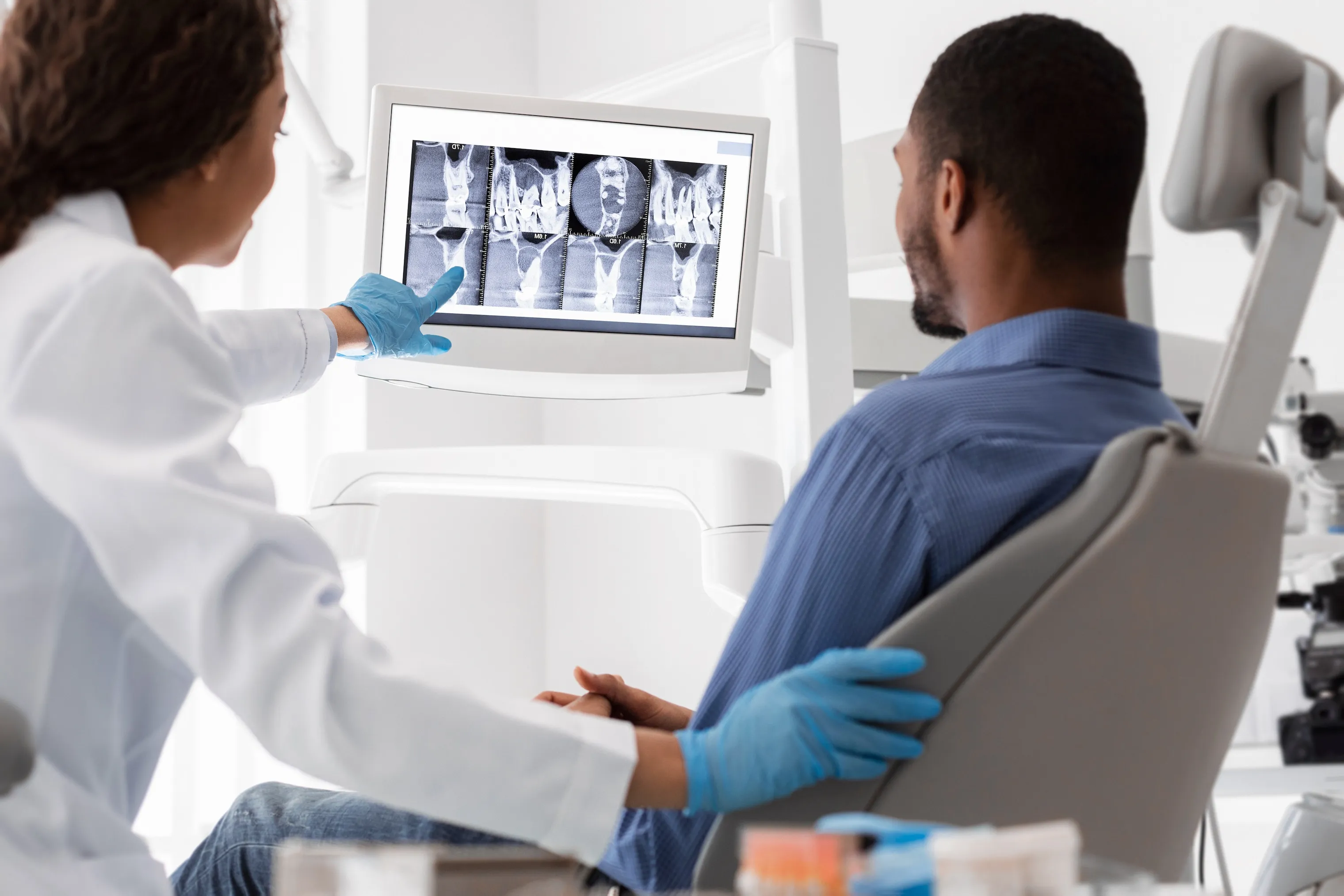
- Exam and X-ray. We check the tooth or implant underneath for decay, cracks, or infection.
- Check the crown. We look at the inside of the crown and its edges for damage.
- Decide: re-cement or replace. If the tooth and crown are sound, re-cementing can be quick. If not, we’ll discuss a new crown.
- Protect the tooth. If a new crown is needed, a temporary crown covers the tooth while the permanent one is made.
Our dental crowns page explains how we digitally scan the tooth and design a new crown in all-ceramic or zirconia, with a temporary to protect it while the final crown is made.
What We Look at Before Recommending Re-Cementing or a New Crown
Not every loose crown should simply go back on. Here’s what we check:
- Is there decay under the crown? Cementing over decay traps the problem.
- How much healthy tooth is left? A short or broken tooth may need a buildup before a crown can hold.
- Does the crown still fit? Worn or chipped edges let bacteria in.
- Is the nerve healthy? Pain or infection may mean the tooth needs a root canal.
- Do you grind your teeth? If so, a night guard may help the next crown last.
- For implants: is the screw intact? A worn screw is replaced rather than retightened.
If the tooth needs more treatment first, root canal therapy may save it. If it can’t be saved, we’ll talk through replacement options, including an implant.
How Much Does It Cost to Fix a Loose Crown?
Re-cementing an intact crown is usually much less than making a new one. The total depends on what we find.
If a new crown is needed, our crowns page lists a general range of $1,000 to $2,500 per tooth, depending on material and complexity. Insurance often covers part of a medically necessary crown.
If you don’t have insurance, the Haven Membership plan includes an emergency exam and 15% off most additional treatments.
How Long Should a Crown Last?
Our crowns page notes that crowns typically last 10 to 15 years, and well-cared-for zirconia and all-ceramic crowns can last longer. Research supports good mid-term results: most single-crown types showed about 95% survival at five years in a large systematic review (Sailer et al., 2015).
If your crown is many years old and has come loose, it may simply be at the end of its life. Replacing it can be the better long-term choice even if it could be re-cemented.
What Are the Risks of Waiting?
Leaving a tooth uncovered for days or weeks can lead to:
- The exposed tooth chipping or breaking
- New decay on the uncovered surface
- Neighboring or opposing teeth shifting, so the old crown no longer fits
- Sensitivity or pain getting worse
A crown that could have been re-cemented on Monday may need replacing by Friday.
If you can’t get in right away, avoid chewing on that side, stick to soft foods, and keep the area clean.
How Can I Keep My Crown From Coming Loose Again?
- Brush twice a day and clean between teeth daily, especially along the crown’s edge.
- Go easy on sticky candy, ice, and hard foods.
- Wear a custom night guard if you grind or clench.
- Keep regular checkups so problems at the crown edge are caught early.
- Call if your crown ever feels loose, clicks, or tastes odd. Early is easier.
At Haven in Rancho Cucamonga, we see patients for loose crowns from across the Inland Empire, including Ontario, Upland, and Fontana. The same rule applies wherever you are: the sooner it’s seen, the more options you have.
Final Takeaways
- Take a loose crown out of your mouth, rinse it, and keep it safe.
- Call your dentist the same day. Pain, swelling, or a broken tooth makes it more urgent.
- Never use superglue. Temporary dental cement is a brief stopgap only.
- Implant crowns often loosen because of a screw, which needs professional care.
- Your dentist will check for decay and damage before deciding to re-cement or replace.
- Seeking emergency medical care is important if you think you inhaled the crown.
Lost a Crown? Call Us Today
Haven Cosmetic Dentistry & Implant Center offers same-day emergency appointments whenever possible. Bring your crown, and we’ll find out why it came loose and how to fix it properly.
Call (909) 980-2272 or request an appointment.
Research References
- Hou R, Zhou H, Hu K, et al. Thorough documentation of the accidental aspiration and ingestion of foreign objects during dental procedure is necessary: review and analysis of 617 cases. Head & Face Medicine. 2016;12(1):23. https://pmc.ncbi.nlm.nih.gov/articles/PMC4957346/
- Sailer I, Makarov NA, Thoma DS, et al. All-ceramic or metal-ceramic tooth-supported fixed dental prostheses (FDPs)? A systematic review of the survival and complication rates. Part I: Single crowns (SCs). Dental Materials. 2015;31(6):603-623. https://pubmed.ncbi.nlm.nih.gov/25842099/
- Jung RE, Pjetursson BE, Glauser R, Zembic A, Zwahlen M, Lang NP. A systematic review of the 5-year survival and complication rates of implant-supported single crowns. Clinical Oral Implants Research. 2008;19(2):119-130. https://pubmed.ncbi.nlm.nih.gov/18067597/
FAQ
Often, yes. If the crown is undamaged, still fits well, and the tooth underneath is healthy, it can usually be cleaned and re-cemented.
Old cement, trapped food, or decay under the crown can cause an odor. Rinse gently and let your dentist check the tooth for decay.
Stick to soft foods and chew on the other side. The exposed tooth is weaker and more sensitive without its crown.
Temporary crowns are designed to come off more easily. Call your dentist so the tooth stays protected until the permanent crown is ready.
Call your dentist and your doctor for advice. If you have coughing, wheezing, or trouble breathing, get emergency medical care right away, because it may have been inhaled.
As soon as possible, ideally the same day or within a day or two. Waiting longer can let the tooth shift or break.
A clicking or wiggling implant crown often means the screw has loosened. Avoid chewing on it and schedule a visit.
Many plans cover some of the cost, but it depends on your plan and how long you’ve had the crown. Our team can check your benefits.
Gum disease and bone loss can weaken the support around a tooth over time, which may contribute to problems with crowns.
Call our office first. We offer Saturday hours and prioritize same-day emergency visits when we can.