


Quick answer: Invisalign uses a series of clear, removable plastic aligners, while braces use brackets bonded to your teeth and connected by wires. Both can straighten teeth well. Invisalign is nearly invisible, easier to clean, and often more comfortable early on, but it only works if worn about 22 hours a day. Braces handle complex cases more predictably.
You’re standing in front of the bathroom mirror, lips pulled back, looking at that one tooth that’s always bugged you.
You’ve thought about straightening your teeth for years. Now you’re ready, but you’re stuck on one question.
Clear aligners or braces?
Your friend loved Invisalign. Your coworker swears braces were the only thing that worked for her. Both of them are probably right, for their own teeth.
The simple answer is… Invisalign is removable and nearly invisible, and braces are fixed to your teeth. Both move teeth with steady, gentle pressure.
The more honest answer is… the “better” option depends on how complex your bite is and how you live. Aligners give you more freedom, but that freedom comes with responsibility. Braces ask less of your discipline but more of your daily routine.
What Is the Difference Between Invisalign and Braces?
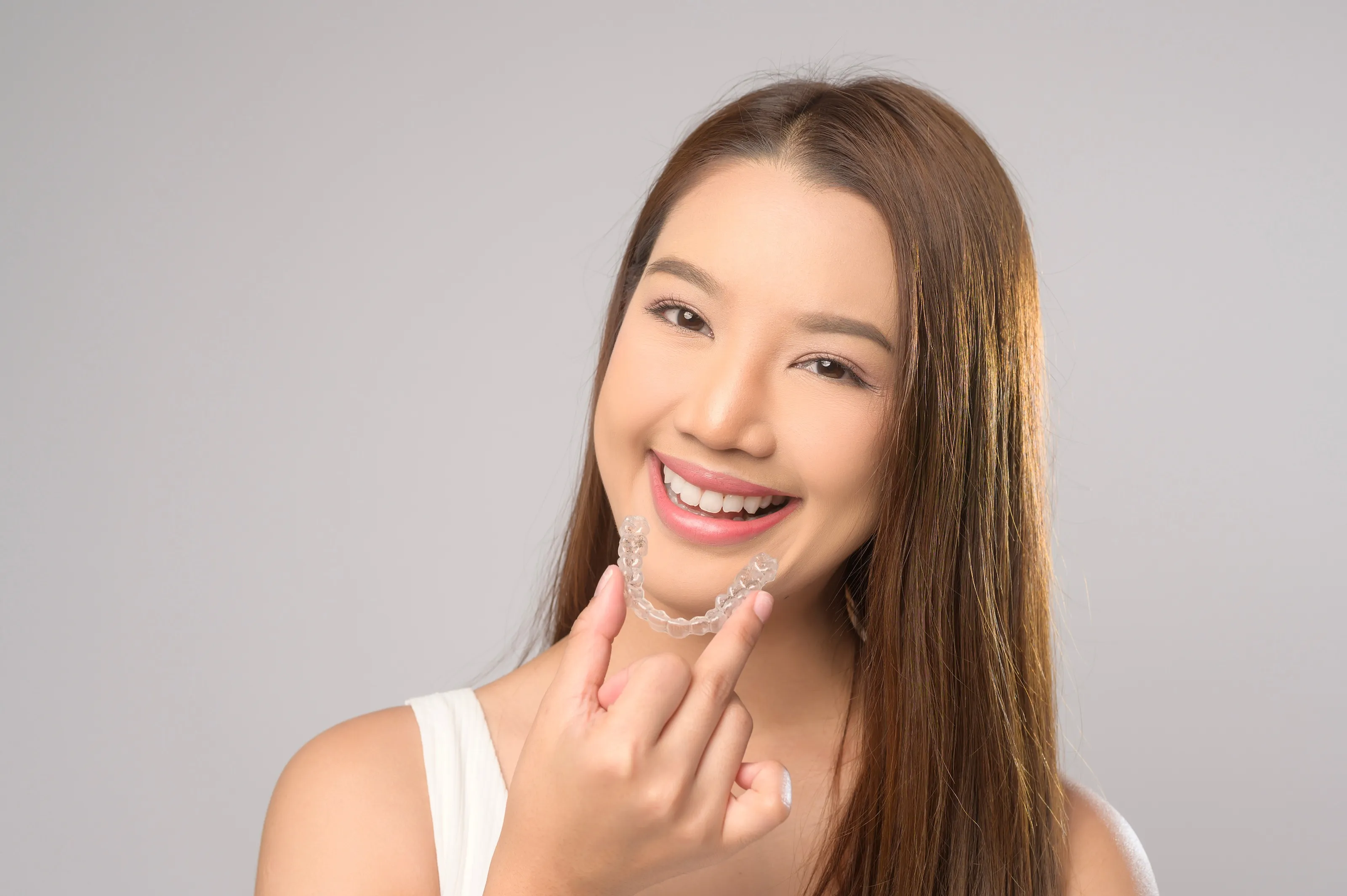
Invisalign is a series of custom clear plastic trays. Each set moves your teeth a small amount. You switch to a new set every one to two weeks and remove them to eat, brush, and floss.
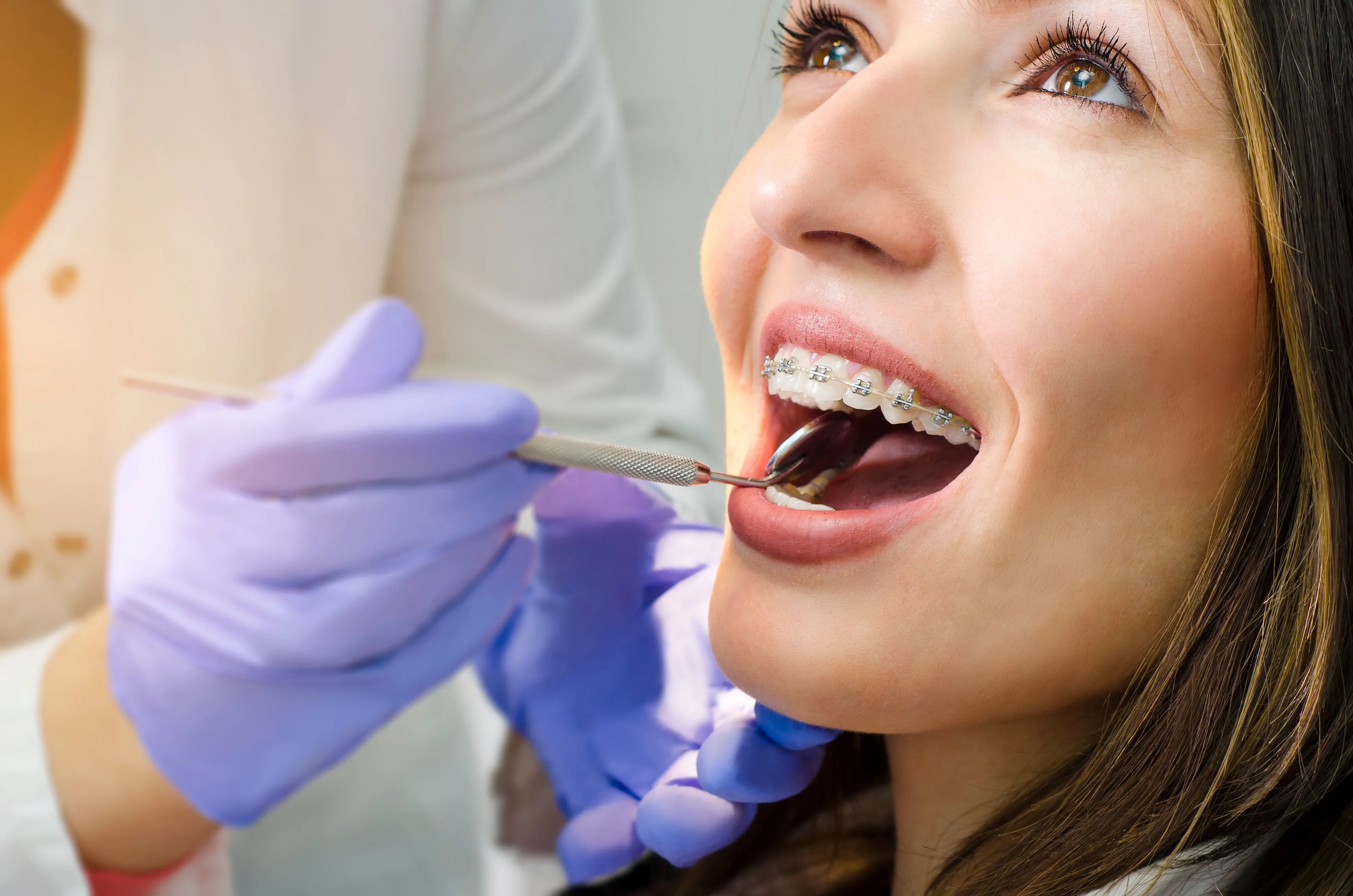
Traditional braces are small brackets bonded to the front of your teeth, connected by a wire. Your dentist or orthodontist adjusts the wire at regular visits to guide your teeth into place.
Learn how aligner treatment works at Haven on our Invisalign page.
Is Invisalign as Effective as Braces?
For many mild to moderate cases, research shows similar results.
A systematic review comparing the two found no statistically significant difference in overall treatment-outcome scores. Aligner treatment also tended to be shorter, while fixed braces did better at some finishing details, like how the back teeth meet (Ke et al., 2019).
For more complex cases, such as those needing premolar extractions, another review found both approaches were effective. Braces achieved better control of tooth angulation and bite contacts, and treatment was shorter with braces in those extraction cases (Jaber et al., 2023).
In short: for straightforward cases, they’re often comparable. As cases get more complex, braces tend to be more predictable.
The Biggest Difference: Who’s in Control
With braces, the appliance is always working. You can’t take it out.
With Invisalign, you are the one keeping treatment on track. Aligners need to be worn about 20 to 22 hours a day, according to our Invisalign page.
Leave them out too often, and teeth don’t move as planned. Treatment can take longer, or the plan may need to be revised.
Invisalign works best for people who will truly wear it.
Invisalign vs. Braces: Pros and Cons
Invisalign pros
- Nearly invisible when worn
- Removable for eating, so there are no food restrictions
- Easier to brush and floss normally
- No brackets or wires to rub cheeks
- Fewer emergency visits for broken brackets
Invisalign cons
- Only works if worn about 22 hours a day
- Easy to lose or forget
- You need to brush before putting aligners back in
- Less predictable for some complex movements
- May involve small tooth-colored attachments bonded to some teeth
Braces pros
- Work all the time without relying on daily wear habits
- Predictable for complex bite problems and larger movements
- Nothing to remove, lose, or remember
Braces cons
- Visible brackets and wires
- Food restrictions (sticky, hard, and chewy foods)
- Harder to clean around, which raises the risk of white spots on enamel
- Wires and brackets can poke or break
Invisalign vs. Braces at a Glance
| Feature | Invisalign | Traditional braces |
|---|---|---|
| Appearance | Clear, nearly invisible | Visible brackets and wires |
| Removable? | Yes | No |
| Daily wear needed | About 20–22 hours | Always on |
| Eating | Remove aligners; eat anything | Avoid sticky, hard, and chewy foods |
| Cleaning | Brush and floss normally | Harder; special tools help |
| Early discomfort | Generally lower in the first days | Generally higher in the first days |
| Best for | Mild to moderate crowding, gaps, and some bite issues | Complex bites, severe crowding, large movements |
| Main risk | Poor results if not worn enough | White spot lesions and gum irritation if hygiene slips |
Which Is More Comfortable?
Both cause some pressure as teeth move. A systematic review found that most studies reported less pain with Invisalign than with fixed braces during the first days of treatment, but the difference faded after that, with no difference noted up to three months (Cardoso et al., 2020).
Aligners also avoid the cheek and lip irritation that brackets can cause. Braces wearers often use orthodontic wax in the first weeks.
Which Is Better for Your Teeth and Gums?
This is where aligners have a clear advantage, mainly because you can remove them to clean.
In one study, about 1.2% of aligner patients developed white spot lesions (early enamel damage), compared with 26% of patients treated with traditional braces (Buschang et al., 2019).
A systematic review also found periodontal health indexes improved during clear aligner treatment compared with fixed appliances, though the authors noted the evidence should be read with some caution (Rossini et al., 2015).
Whichever option you choose, keep up with regular cleanings. Braces wearers especially need careful brushing around brackets.
Who Is a Good Candidate for Invisalign, and Who Should Choose Braces?
Invisalign is often a good fit if you:
- Have mild to moderate crowding or spacing
- Had braces before and your teeth have shifted
- Want treatment that’s hard for others to notice
- Are confident you’ll wear aligners nearly all day
- Want to keep eating your normal foods
Braces may be the better choice if you:
- Have severe crowding, large gaps, or teeth that need to move a long distance
- Need significant bite correction or tooth extractions as part of treatment
- Have teeth that need major rotation or vertical movement
- Know you’re likely to forget or skip wearing a removable appliance
Many people fall somewhere in the middle. That’s when a scan and an honest conversation matter most.
What Does Daily Life Look Like With Each Option?
With Invisalign, your day revolves around taking aligners out and putting them back in. You remove them to eat or drink anything but water, brush before you put them back, and carry a case wherever you go.
Snacking all day gets harder, because every snack means removing the aligners and brushing again. Some people find this helps them snack less.
With braces, there’s nothing to remove, but meals take more planning. Sticky, hard, and chewy foods can bend wires or pop off brackets. Brushing takes longer, and floss threaders or a water flosser help clean under the wire.
Neither routine is hard once you’re used to it. The question is which one you’ll actually stick with for a year or more.
Invisalign for Teens vs. Adults
Our Invisalign page notes that aligners are used for both teens and adults with mild to moderate alignment issues.
For adults, the discreet look and removability are usually the biggest draws. Busy schedules and professional settings make clear aligners appealing.
For teens, the deciding factor is often responsibility. A teen who reliably wears aligners can do very well. One who leaves them in a backpack may be better served by braces.
What We Look at Before Recommending Invisalign
We don’t start with the product. We start with your teeth and your life.
- How complex your bite is. Crowding, gaps, overbite, underbite, and crossbite each behave differently.
- Whether teeth need to rotate, rise, or move a long way. Some movements are harder with aligners.
- Your gum and bone health. Healthy gums come first.
- Your daily routine. Can you realistically wear aligners about 22 hours a day?
- Your age. Teens and adults both use aligners, but compliance matters more for teens.
- Other planned dental work. Straightening first can make later veneers or crowns more conservative.
Our digital scan and smile preview show how your teeth are expected to move before you start. It’s part of the planning we describe on our new patient visit page.
If your case would be better served by braces, we’ll tell you.
How Long Does Invisalign Take Compared With Braces?
Treatment time depends on your case, not just the appliance.
Our Invisalign page lists typical treatment of 6 to 18 months, with most patients finishing in about 12 months. Simple cases can be shorter, and complex cases can take longer.
Braces timelines also vary widely, and complex cases often take longer than mild ones.
After either option, you’ll need retainers to keep your teeth from shifting back. Our page recommends full-time retainer wear for three to six months after aligner treatment, then nightly wear.
Invisalign vs. Braces Cost
For patients in Rancho Cucamonga and the surrounding Inland Empire, our Invisalign page lists a typical range of $3,000 to $8,000, depending on complexity and length of treatment.
Braces costs vary by case and provider. Some dental plans include orthodontic benefits, which our team can verify. You can see accepted PPO plans on our insurance page. FSA or HSA funds can often be used too. Our financing options let you spread payments over time.
What Are the Limits and Risks of Each?
- Both can cause temporary soreness and, in some cases, gum irritation.
- Both require retainers afterward. Without them, teeth tend to drift back.
- Invisalign may not achieve every planned movement, especially without consistent wear. Refinement aligners are sometimes needed.
- Braces carry a higher risk of white spot lesions if brushing around brackets is difficult.
- Neither fixes jaw-size problems that require surgery on their own.
Want a deeper side-by-side look? Read our earlier post, Invisalign vs Braces: Which Is Better for Your Smile?. Planning straightening as part of a bigger change? See the steps of a successful smile makeover.
Final Takeaways
- Invisalign is clear and removable; braces are fixed brackets and wires.
- For mild to moderate cases, results are often comparable.
- Braces are more predictable for complex bites and larger movements.
- Aligners are easier to clean and linked with fewer white spot lesions.
- Invisalign only works if you wear it about 22 hours a day.
- Both require retainers to keep your results.
Find Out Which Option Fits Your Smile
At Haven Cosmetic Dentistry & Implant Center in Rancho Cucamonga, we’ll scan your teeth, show you a digital preview, and give you an honest answer about whether Invisalign is the right fit.
We welcome patients from Rancho Cucamonga, Ontario, Upland, Fontana, Eastvale, and Claremont. Call (909) 980-2272 or schedule your consultation.
Research References
- Ke Y, Zhu Y, Zhu M. A comparison of treatment effectiveness between clear aligner and fixed appliance therapies. BMC Oral Health. 2019;19(1):24. https://pubmed.ncbi.nlm.nih.gov/30674307/
- Jaber ST, Hajeer MY, Sultan K. Treatment effectiveness of clear aligners in correcting complicated and severe malocclusion cases compared to fixed orthodontic appliances: a systematic review. Cureus. 2023;15(4):e38311. https://pmc.ncbi.nlm.nih.gov/articles/PMC10148732/
- Cardoso PC, Espinosa DG, Mecenas P, et al. Pain level between clear aligners and fixed appliances: a systematic review. Progress in Orthodontics. 2020;21:3. https://pmc.ncbi.nlm.nih.gov/articles/PMC6970090/
- Buschang PH, Chastain D, Keylor CL, et al. Incidence of white spot lesions among patients treated with clear aligners and traditional braces. Angle Orthodontist. 2019;89(3):359-364. https://pmc.ncbi.nlm.nih.gov/articles/PMC8117696/
- Rossini G, Parrini S, Castroflorio T, et al. Periodontal health during clear aligners treatment: a systematic review. European Journal of Orthodontics. 2015;37(5):539-543. https://pubmed.ncbi.nlm.nih.gov/25548145/
FAQ
Sometimes. It depends on which movements are left. Your dentist would need new scans to see if aligners can finish the job.
It’s best to remove aligners for anything other than plain water. Hot and colored drinks can warp or stain the aligners and trap sugar against your teeth.
Some people notice a slight lisp for the first few days. It usually fades as your tongue adjusts.
Yes. With braces, a mouthguard is strongly recommended. With aligners, ask your dentist whether to wear them or a separate mouthguard during contact sports.
Call your dentist. You may be asked to wear the previous or next set while a replacement is ordered.
Often, yes. Attachments may bond differently to crowns, so your dentist will plan around existing dental work.
Invisalign can be provided by trained general and cosmetic dentists as well as orthodontists. Complex cases may be referred to an orthodontist.
Many mild to moderate overbites can be improved with aligners. More severe bite problems may need braces or other treatment.
Check-ins are usually spaced several weeks apart. Your dentist will set a schedule based on your plan.
Ask your dentist first. Whitening is often best timed near the end of treatment, once your teeth are in their final positions.