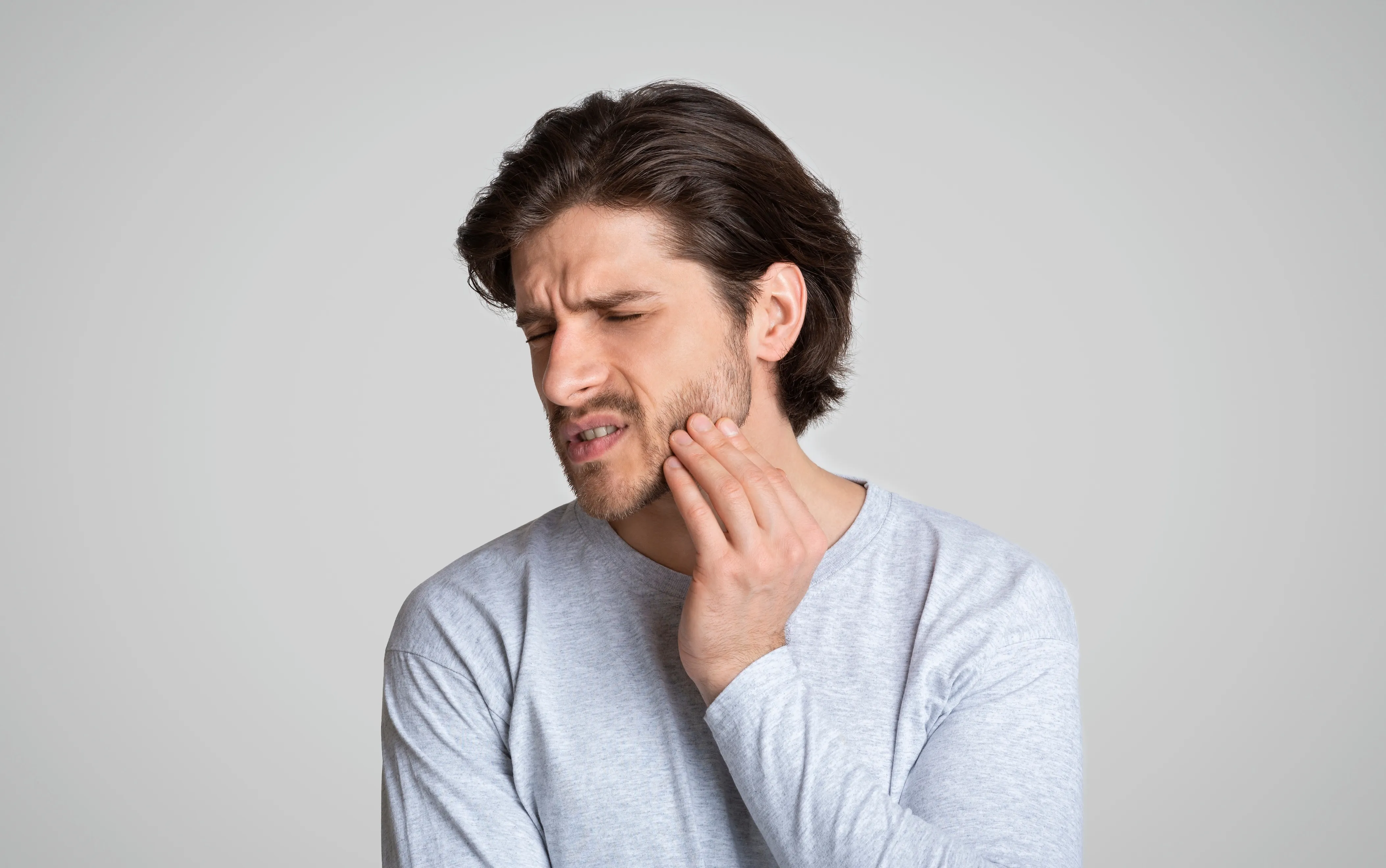



Quick answer: A molar implant replaces a missing back tooth with a titanium post anchored in your jawbone, topped with a strong crown. Because it’s fixed in bone instead of resting on gums or neighboring teeth, it lets you bite and grind food on that side again, and it helps keep nearby teeth from drifting into the gap.
You’re at a barbecue, and someone hands you a perfectly charred rib.
You hesitate. Ever since you lost that lower back tooth, you’ve been quietly steering food to the other side of your mouth.
Steak gets cut into tiny pieces. Nuts are mostly off the menu. And lately, that “good side” has started to feel tired.
The simple answer is… a molar implant can give you back a solid, fixed tooth to chew on, on the side you’ve been avoiding.
The more honest answer is… not every missing molar needs to be replaced, and molar implants come with their own challenges, like bone volume and sinus position. Whether it’s worth it depends on how much that gap is affecting your chewing, your bite, and the teeth around it.
What Do Molars Actually Do?
Your front teeth cut and tear. Your molars are the wide, flat teeth at the back that crush and grind food into pieces small enough to swallow.
Because they sit closer to the jaw joint, molars handle much of the heavy chewing load.
When one is missing, the teeth around it have to do extra work. Many people adapt without noticing, by chewing on the other side or avoiding tougher foods.
Does Losing a Molar Really Affect Chewing?
It depends on which molar and what’s left around it.
Research reviewing second molars found that a bite with intact first molars still achieved about 90% chewing efficiency, and that replacing a missing second molar gave only some improvement (Greenstein et al., 2018). Losing a first molar, or several back teeth, usually has a bigger effect.
The same review found that unopposed back teeth commonly over-erupt into the space, with about 20% moving 2 mm. Most of that movement was minor, but it can complicate later treatment (Greenstein et al., 2018).
There’s also the bone. After an extraction, the bone and gum around the site change shape, and the biggest changes happen within the first year (Schropp et al., 2003). That can affect whether an implant can be placed later without grafting.
The takeaway: a missing molar isn’t always urgent, but it’s worth a real decision, not a default.
How Do Molar Implants Restore Chewing Power?
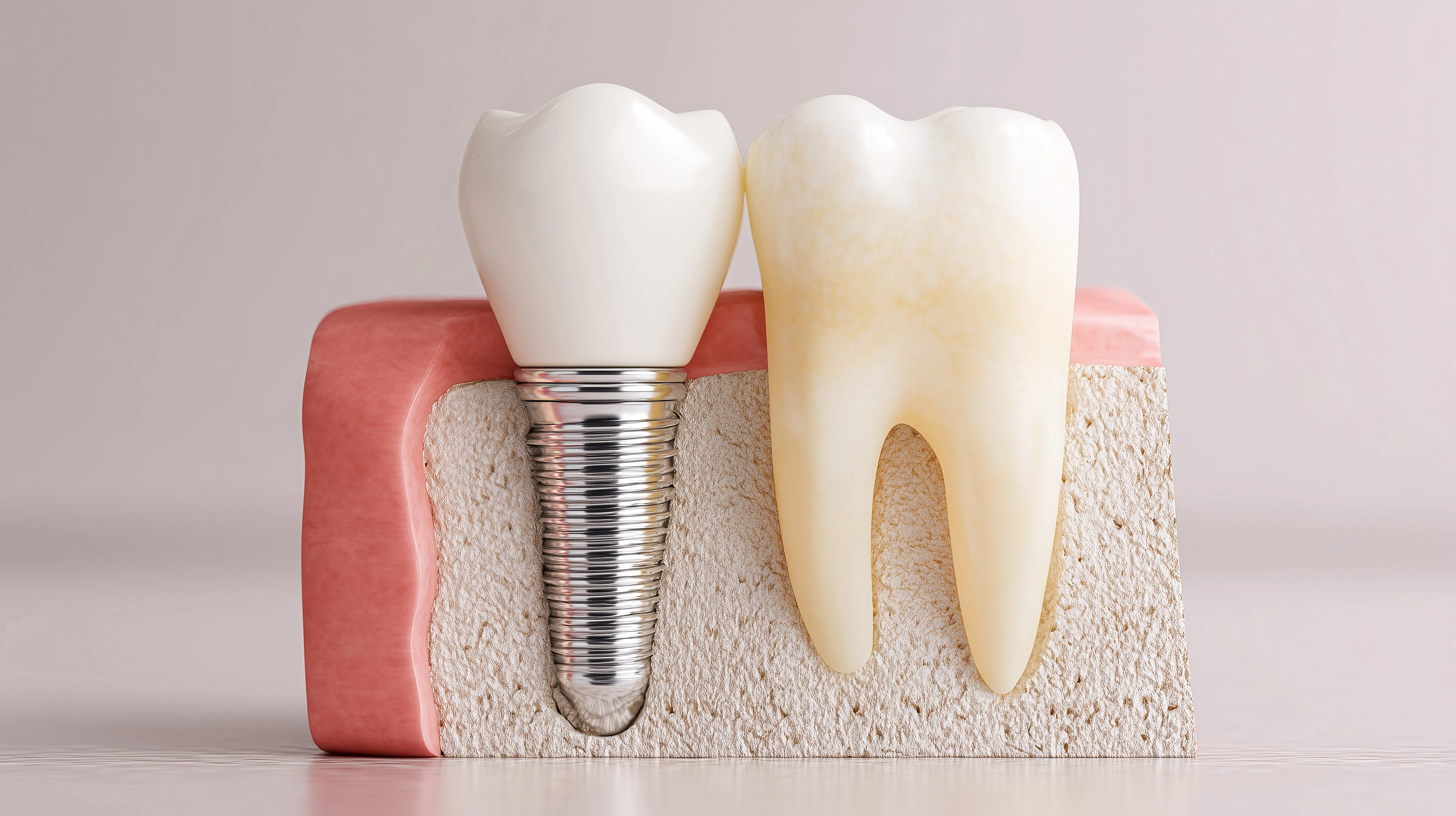
A molar implant works in three parts:
- The implant post. A titanium post placed in the jawbone. Over a few months, bone bonds to its surface.
- The abutment. A connector that attaches the crown to the post.
- The crown. A strong, custom-shaped tooth designed to meet your opposing teeth.
Because the post is anchored in bone, it can take chewing forces directly. It doesn’t rely on clasps, suction, or neighboring teeth.
That’s the key reason implants feel more like a natural tooth when you chew.
Implant-supported single crowns do well in research. A systematic review found 96.8% of implants and 94.5% of implant crowns were still in place after five years (Jung et al., 2008).
Over longer periods, a 20-year meta-analysis estimated roughly four out of five implants survived two decades (Kupka et al., 2024).
The Biggest Difference: Fixed in Bone vs. Supported by Other Teeth
There are four main ways to handle a missing molar. The biggest difference is what holds the new tooth in place.
| Option | What holds it | Effect on other teeth | Chewing feel | Main trade-off |
|---|---|---|---|---|
| Molar implant | A post fused to your jawbone | Neighboring teeth left untouched | Fixed; closest to a natural tooth | Surgery and several months of healing |
| Dental bridge | Crowns on the teeth on either side | Neighbors are filed down for crowns | Fixed and stable | Puts extra load and risk on the supporting teeth |
| Partial denture | Clasps on nearby teeth and gum support | Clasps can stress supporting teeth | Removable; less stable for hard foods | Lowest upfront cost; daily removal |
| Leave the space | Nothing | Opposing tooth may over-erupt; neighbors may tip | Depends on remaining teeth | No cost now; may limit options later |
Up front, implants and short bridges cost about the same, with similar failure rates. Researchers judged implants more economical overall because they don’t require preparing healthy neighboring teeth (Scheuber et al., 2012).
Learn more about the alternatives on our dental bridges and partial dentures pages.
Are Molar Implants Harder Than Front Tooth Implants?
They can be, for a few reasons:
- Upper molars sit under the sinus. If there isn’t enough bone below the sinus floor, a sinus lift may be needed first.
- Lower molars sit near a nerve. The implant has to be placed with a safe margin from the nerve canal.
- Bite forces are higher at the back. The crown and implant must be planned for the load.
- Access is harder. The back of the mouth is tighter for surgery and cleaning.
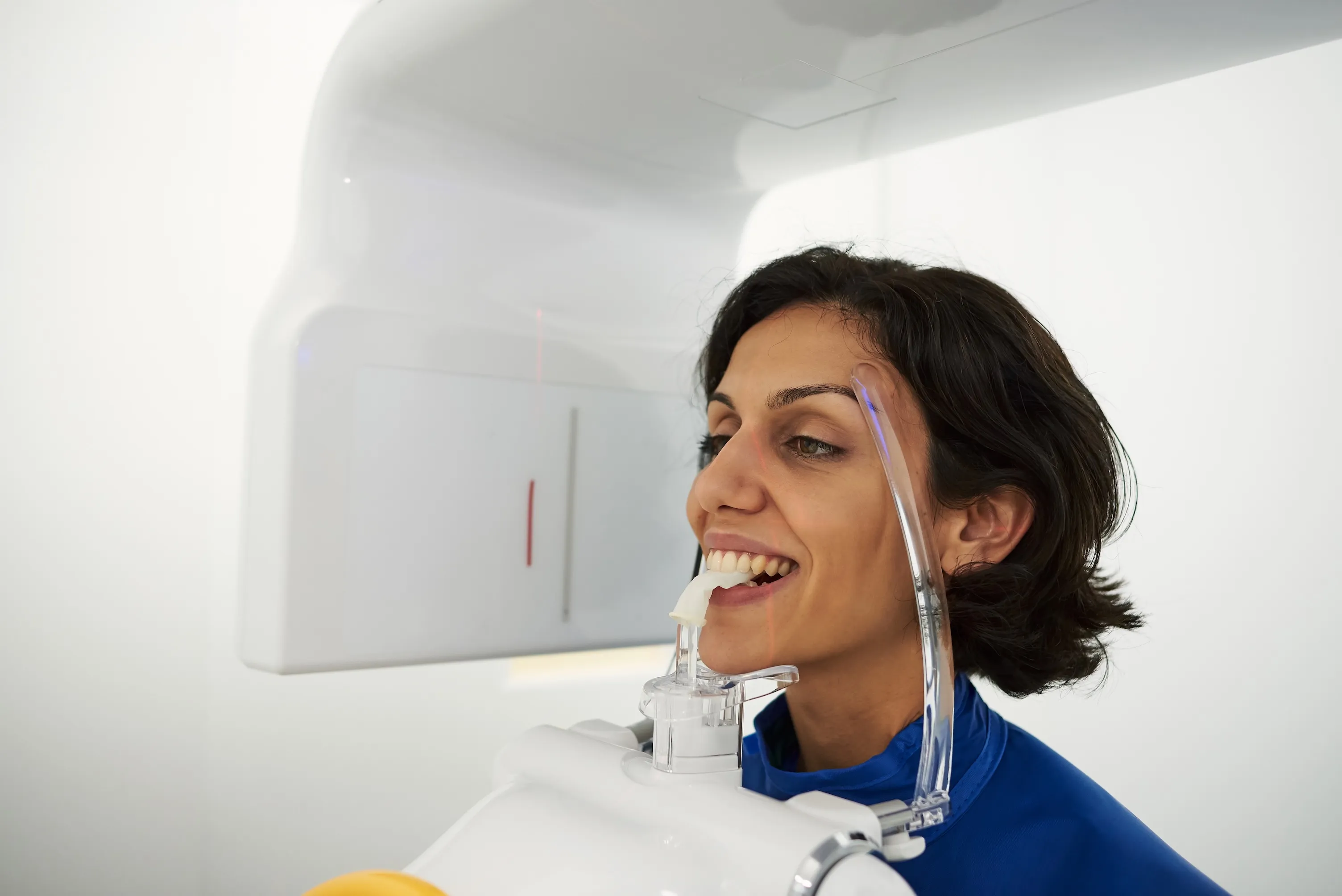
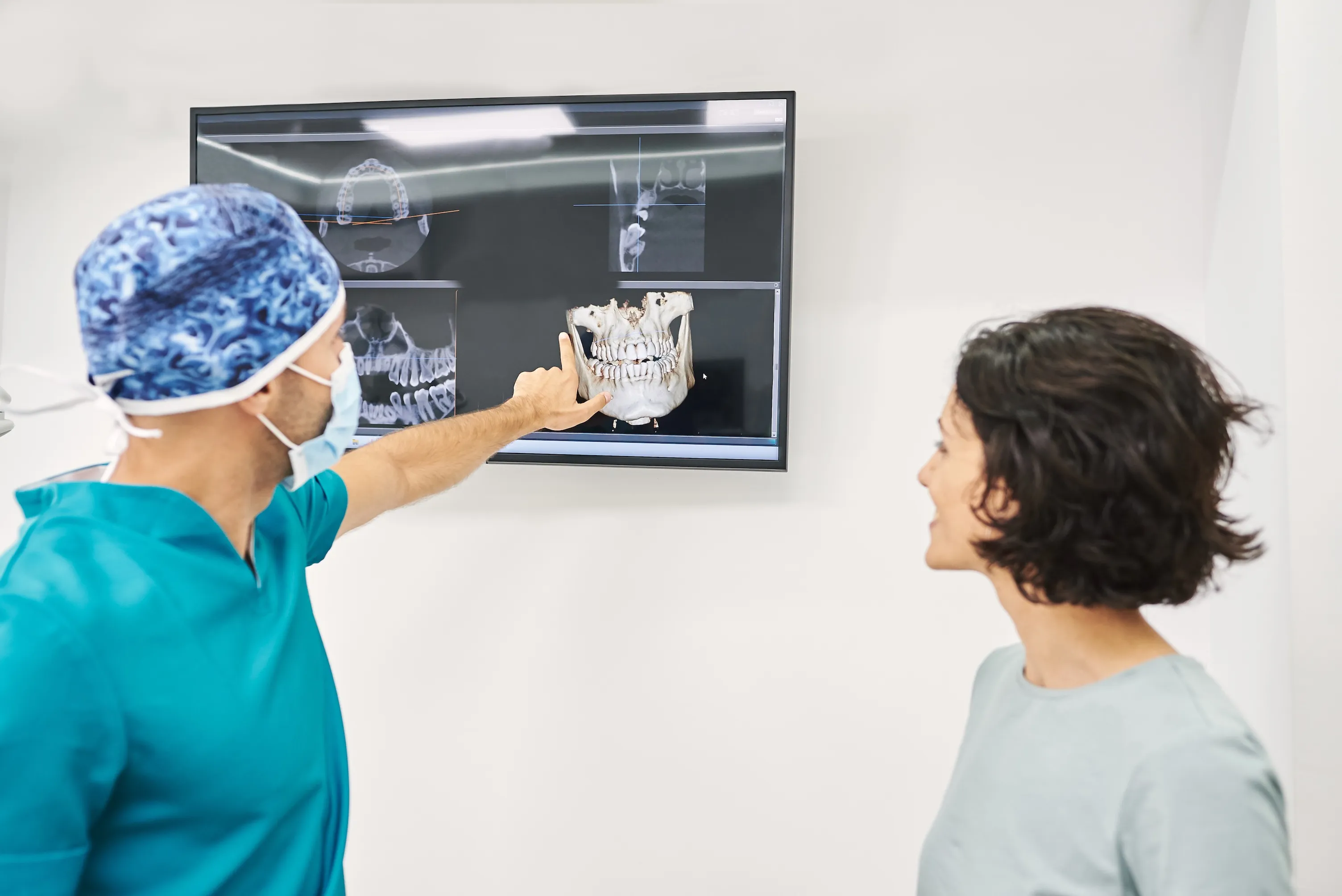
This is why 3D imaging matters so much for molars. Clinical recommendations support using cone beam CT in implant planning when it’s justified, because it shows bone volume, the sinus, and nerve position (Jacobs et al., 2018).
Haven has an in-house CT scanner for this purpose. You can see it on our technology page.
Signs You Should Replace a Missing Molar Sooner Rather Than Later
Some people live comfortably with a missing back tooth for years. Others notice problems quickly.
It’s worth acting sooner if you notice:
- You avoid certain foods or always chew on one side
- Food keeps getting packed into the gap
- The tooth above or below the space looks longer or is getting sensitive
- Neighboring teeth are tipping into the space
- Your jaw feels tired or sore after meals
- You’re already planning other dental work in that area
If none of these apply and you’re comfortable, monitoring the space with regular checkups can be a reasonable choice. Just make sure it’s an active decision you revisit, not something you forget about.
Can I Get a Molar Implant Years After Losing the Tooth?
Often, yes. Many patients get implants long after an extraction.
The main question is how much bone is left. Over time, the ridge where the tooth used to be can become narrower or shorter. Under the upper molars, the sinus can also expand downward.
That doesn’t rule out an implant. It may mean a bone graft, a sinus lift, or a carefully chosen implant size. A 3D scan answers this question quickly.
What We Look at Before Recommending a Molar Implant
A missing molar doesn’t automatically mean an implant. Here’s what we weigh:
- Which molar is missing. First molars usually matter more for chewing than second molars.
- What you’re noticing. Trouble chewing, food trapping, or dislike of the gap all count.
- Your opposing tooth. Is it starting to drift down or up into the space?
- Bone volume and quality. Shown on a 3D scan. Low bone may mean grafting or a sinus lift.
- Your gum health. Active gum disease needs treatment first.
- Your health and habits. Smoking and uncontrolled health conditions affect healing.
- Grinding. Heavy grinders may need a night guard to protect the implant crown.
Researchers reviewing second molars concluded that, after a full discussion, it’s usually the patient’s preference that decides whether to replace the tooth (Greenstein et al., 2018). We agree. Our job is to give you a clear picture.
What Is the Molar Implant Process Like?
Most molar implants follow this path:
- Consultation and 3D scan. We plan the implant position around bone, sinus, and nerve.
- Extraction, if needed. Sometimes with a bone graft to preserve the site. See our tooth extraction page.
- Implant placement. Usually under local anesthesia, with sedation available.
- Healing. Typically about 3 to 6 months while bone bonds to the implant.
- Final crown. Designed to fit your bite and the teeth around it.
For what the first days feel like, read our dental implant recovery timeline.
What Are the Risks and Limits of Molar Implants?
Implants are reliable, but they aren’t risk-free.
- Gum and bone inflammation. Across studies, about 22% of patients developed peri-implantitis around implants (Derks & Tomasi, 2015). Good cleaning and regular checkups matter.
- Smoking. Smokers had about 2.4 times the odds of implant failure compared with non-smokers (Mustapha et al., 2021).
- Mechanical issues. Screw or abutment loosening was the most common technical complication in implant crowns, with a 12.7% cumulative rate over five years (Jung et al., 2008). If your implant crown ever feels loose, read what to do when a crown comes loose.
- Extra procedures. Grafting or a sinus lift adds time and cost.
For people missing all their teeth, implant-retained dentures can help, but research shows the measurable chewing benefit over conventional dentures is clearest for lower overdentures in people with significant bone loss (Fueki et al., 2007). That’s different from replacing a single molar.
How Much Does a Molar Implant Cost?
Our dental implant page lists a typical range of $3,000 to $6,000 per tooth, including the post, abutment, and crown. Grafting or a sinus lift adds to that.
One long-term cost study of molars found implants gave better quality of life than bridges, though a lower-cost bridge was cheaper over 30 years in that insurance system (Arai et al., 2018).
For payment options, see our guide on how to afford dental implants.
For patients in Rancho Cucamonga and nearby Inland Empire cities, Haven’s free implant consultation includes a 3D CT scan, so you’ll know whether you need grafting before you decide.
Final Takeaways
- Molars do the heavy grinding. Losing one can push you to chew on one side.
- Not every missing molar must be replaced. Your chewing, bite, and preferences matter.
- A molar implant is anchored in bone, so it doesn’t rely on neighboring teeth.
- Back-tooth implants need careful 3D planning around the sinus and nerve.
- Good home care and checkups help prevent peri-implant problems.
- Waiting after an extraction can lead to bone loss and more complex treatment.
Find Out If a Molar Implant Is Right for You
At Haven Cosmetic Dentistry & Implant Center in Rancho Cucamonga, we’ll scan your jaw, explain every option for your missing molar, including leaving it, and give you a clear plan and cost.
We see patients from Rancho Cucamonga, Ontario, Upland, Fontana, Eastvale, and Claremont. Call (909) 980-2272 or book your free implant consultation.
Research References
- Greenstein G, Greenstein B, Carpentieri J. The need to replace a missing second molar with a dental implant restoration: analysis of a controversial issue. Compendium of Continuing Education in Dentistry. 2018;39(10):686-693. https://pubmed.ncbi.nlm.nih.gov/30421938/
- Schropp L, Wenzel A, Kostopoulos L, Karring T. Bone healing and soft tissue contour changes following single-tooth extraction: a clinical and radiographic 12-month prospective study. International Journal of Periodontics & Restorative Dentistry. 2003;23(4):313-323. https://pubmed.ncbi.nlm.nih.gov/12956475/
- Jung RE, Pjetursson BE, Glauser R, Zembic A, Zwahlen M, Lang NP. A systematic review of the 5-year survival and complication rates of implant-supported single crowns. Clinical Oral Implants Research. 2008;19(2):119-130. https://pubmed.ncbi.nlm.nih.gov/18067597/
- Kupka JR, König J, Al-Nawas B, et al. How far can we go? A 20-year meta-analysis of dental implant survival rates. Clinical Oral Investigations. 2024;28(10):541. https://pubmed.ncbi.nlm.nih.gov/39305362/
- Scheuber S, Hicklin S, Brägger U. Implants versus short-span fixed bridges: survival, complications, patients' benefits. A systematic review on economic aspects. Clinical Oral Implants Research. 2012;23(Suppl 6):50-62. https://pubmed.ncbi.nlm.nih.gov/23062127/
- Jacobs R, Salmon B, Codari M, et al. Cone beam computed tomography in implant dentistry: recommendations for clinical use. BMC Oral Health. 2018;18(1):88. https://pubmed.ncbi.nlm.nih.gov/29764458/
- Derks J, Tomasi C. Peri-implant health and disease. A systematic review of current epidemiology. Journal of Clinical Periodontology. 2015;42(Suppl 16):S158-S171. https://pubmed.ncbi.nlm.nih.gov/25495683/
- Mustapha AD, Salame Z, Chrcanovic BR. Smoking and dental implants: a systematic review and meta-analysis. Medicina (Kaunas). 2021;58(1):39. https://pmc.ncbi.nlm.nih.gov/articles/PMC8780868/
- Fueki K, Kimoto K, Ogawa T, et al. Effect of implant-supported or retained dentures on masticatory performance: a systematic review. Journal of Prosthetic Dentistry. 2007;98(6):470-477. https://pubmed.ncbi.nlm.nih.gov/18061741/
- Arai K, Kawakami K, Teranishi Y, et al. Cost-effectiveness of molar single-implant versus fixed dental prosthesis. BMC Oral Health. 2018;18:141. https://pmc.ncbi.nlm.nih.gov/articles/PMC6102921/
FAQ
Sometimes. Immediate placement depends on infection, bone, and how stable the implant can be. A 3D scan helps decide whether to place it the same day or let the site heal first.
Only if there isn’t enough bone below the sinus. Your CT scan shows the bone height, and many patients don’t need one.
Once the implant has healed and the final crown is in place, most patients can chew normally, including firmer foods.
Usually not. Wisdom teeth generally aren’t replaced, because the remaining molars handle chewing.
Often, yes, but grinding adds stress. Your dentist may recommend a night guard to protect the implant crown.
Implant crowns can last many years, but they can wear or chip over time and may eventually need replacing, just like crowns on natural teeth.
Sometimes two implants are used, or an implant-supported bridge. The best design depends on bone, bite, and space.
Food can collect around any back tooth. Flossing, a water flosser, or small brushes help keep the area clean.
Many people with well-controlled diabetes can get implants. Your dentist will review your health history and may coordinate with your physician.
It feels firm and stable. It doesn’t have the same cushioning ligament as a natural tooth, so some people notice a slightly different feel at first.