


Quick answer: Most people afford dental implants by combining several things: using PPO insurance benefits where they apply, paying with pre-tax FSA or HSA dollars, splitting treatment across benefit years, and spreading the remaining balance into monthly payments through patient financing. An in-house membership plan or a phased treatment plan can lower the total further.
You finally said it out loud at the dinner table: “I think I need an implant.”
Then someone asked the question you were already dreading. “How much is that going to cost?”
Maybe you have a cracked molar that can’t be saved. Maybe a bridge failed. Or maybe you’ve been chewing on one side for two years and you’re tired of it.
Whatever brought you here, the price is usually the thing standing between you and a decision.
The simple answer is… you don’t have to pay for an implant all at once, and most people don’t.
The more honest answer is… affording an implant is a planning problem, not just a money problem. The patients who end up paying the least usually decide how to pay before they decide when to start.
This guide walks through every realistic option, what each one costs you, and the shortcuts that tend to cost more later.
Why Do Dental Implants Cost So Much?
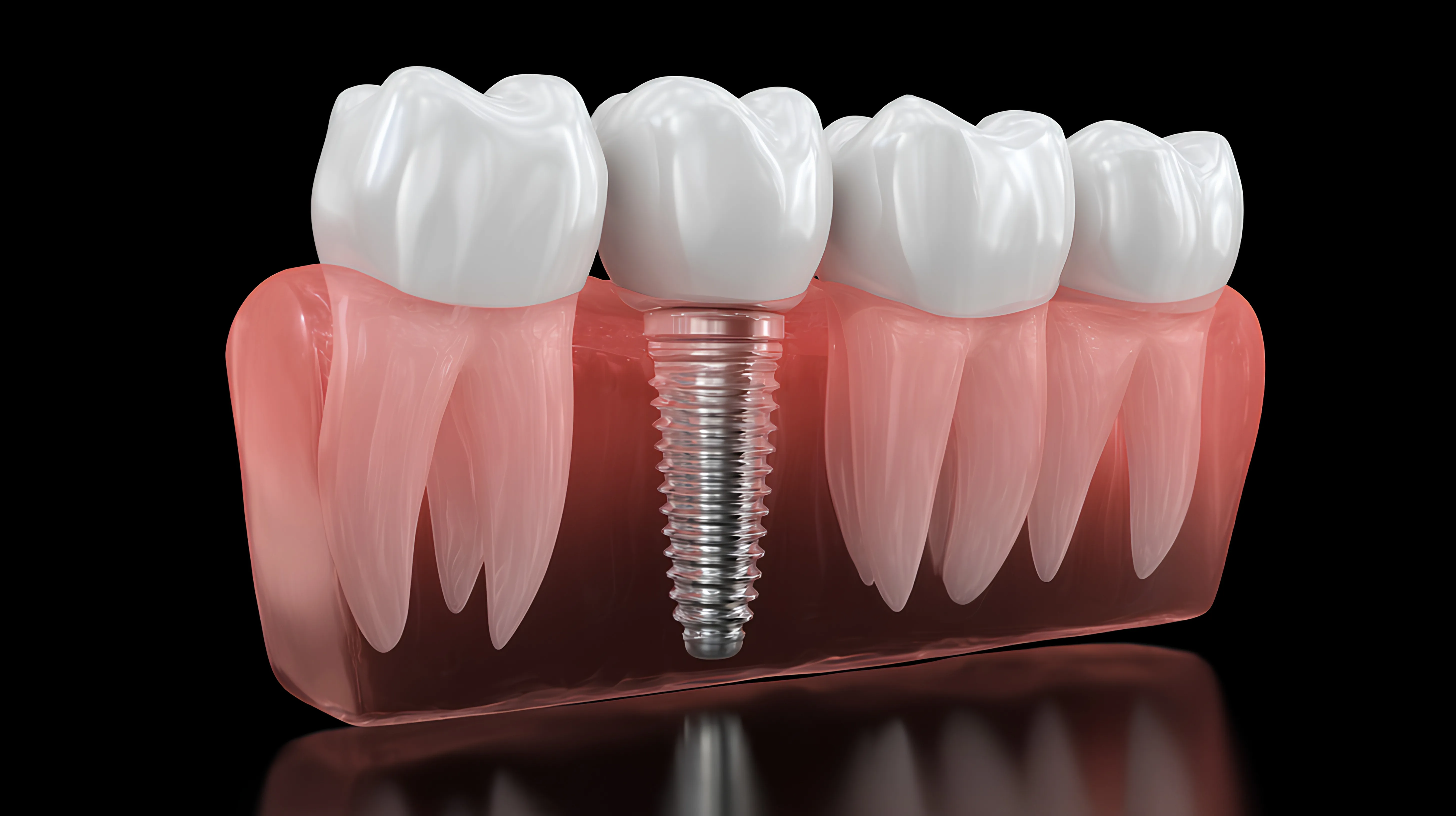
An implant isn’t one product. It’s a small surgical procedure, a titanium post, a connector called an abutment, and a custom crown, plus the imaging and planning that make it safe.
On our dental implant page, we list a typical range of $3,000 to $6,000 per tooth for the post, abutment, and crown. The final number depends on the case, whether bone grafting is needed, and the crown material.
Cost is a real barrier for a lot of people. In a large U.S. national health survey, about 14% of adults said they couldn’t afford dental treatment, and that group had significantly more untreated decay (Alkhabbaz et al., 2025).
Waiting rarely makes the bill smaller.
After a tooth is removed, the bone and gum around the empty space change shape, and the biggest changes happen within the first year (Schropp et al., 2003). If too much bone is lost, grafting may be needed before an implant can be placed, which adds cost.
How Can I Afford Dental Implants? 7 Options That Work
Most patients use two or three of these together. Here is how each one works.
1. Use your PPO dental insurance (if you have it)
Coverage for implants varies a lot from plan to plan. Some plans help with parts of treatment, like the exam, imaging, extraction, or crown. Others exclude the implant post itself.
Haven accepts PPO dental plans, but not HMO plans. Our team checks your benefits before treatment, so you know your estimated share up front. You can see the list of accepted carriers on our dental insurance page.
If you want the details on deductibles, annual maximums, and missing-tooth clauses, read our guide: Dental Implant Insurance Explained.
2. Split treatment across two benefit years
Many dental plans reset their annual maximum on January 1. Implant treatment often happens in stages over several months anyway.
With careful scheduling, one stage (for example, the extraction or implant placement) can fall in one benefit year and the crown in the next. That can let you use two years of benefits for one tooth.
Ask us to map your treatment timeline against your plan year before you start.
3. Pay with FSA or HSA funds
Our insurance page notes that pre-tax FSA and HSA dollars can be used for most treatments, including dental implants. Because that money isn’t taxed, it effectively lowers what you pay compared with using after-tax income.
FSA funds usually have use-it-or-lose-it deadlines, so timing matters. HSA balances roll over, which makes them useful for planned treatment.
4. Spread the cost with patient financing
Haven works with several lenders, including CareCredit, Alphaeon Credit, Proceed Finance, LendingClub Patient Solutions, and Allegro Credit. Prequalification uses a soft credit check that doesn’t affect your credit score, according to our dental financing page.
Some plans offer short-term, interest-free promotions. Others offer longer terms with lower monthly payments. Rates and terms depend on the lender and your credit.
Read the fine print on “no interest” offers. Some promotional plans charge deferred interest if the balance isn’t paid in full by the end of the promotion.
5. Join an in-house membership plan
If you don’t have insurance, the Haven Membership plan covers routine exams, cleanings, and X-rays for an annual fee and gives members 15% off most additional services, including dental implants. There are no deductibles, claim forms, or waiting periods.
For someone planning implant treatment this year, the discount alone can outweigh the membership fee. Ask us to run the numbers for your plan.
6. Phase your treatment
If you need more than one tooth replaced, you don’t always have to do everything at once.
We can prioritize the teeth that matter most for chewing and health, and plan the rest for later. A phased plan should still be designed as a whole, so each step fits the final result.
7. Consider a dental school clinic
Some university dental schools run implant clinics. At Loma Linda University’s Implant Dentistry Clinic, for example, care is delivered by dentists in advanced specialty training, and the clinic accepts self-referrals (Loma Linda University School of Dentistry, 2026).
Fees and wait times vary, and treatment usually takes more appointments. It can still be a reasonable path for some patients.

The Biggest Difference: Monthly Payment vs. Total Cost
This is where most people get tripped up.
A low monthly payment can feel affordable. But a long loan at a high interest rate can make the total cost of your implant much higher than the treatment price.
A short interest-free promotion paid on time can cost exactly the treatment price. The same promotion paid late may not.
Always compare total cost, not just the monthly number.
Here’s a side-by-side look at the main options:
| Option | What it lowers | Watch out for | Best for |
|---|---|---|---|
| PPO insurance | Your share of covered services | Annual maximums, waiting periods, implant exclusions | Patients with active PPO coverage |
| Splitting across benefit years | Uses two years of plan maximums | Requires planning the timeline up front | Treatment that already spans several months |
| FSA / HSA | Effective cost, because funds are pre-tax | FSA deadlines; contribution limits | Anyone with an employer FSA or an HSA |
| Patient financing | Upfront cost (spread monthly) | Interest rates, deferred-interest promotions | Patients who want to start now and pay over time |
| Haven Membership | 15% off most additional services | Annual fee; it’s a discount, not insurance | Patients without dental insurance |
| Phased treatment | How much you pay at once | Needs a full plan so phases fit together | Patients replacing several teeth |
| Dental school clinic | Often lower fees | More visits, longer timelines, limited availability | Flexible schedules and budgets |
Are Cheaper Dental Implants Worth It?
Sometimes a lower price reflects a real saving. Sometimes it reflects something left out.
When you compare quotes, check whether each one includes:
- 3D imaging and treatment planning
- The implant post, the abutment, and the final crown
- Any extraction or bone grafting you need
- Temporary teeth during healing, if needed
- Follow-up visits
A quote for “the implant” alone can look half the price of a complete package and end up costing the same. Here in Rancho Cucamonga and across the Inland Empire, it’s worth asking every office for an itemized estimate so you’re comparing the same things.
Planning matters too. Clinical guidelines recommend 3D cone beam CT imaging in implant dentistry when it’s justified for the case, because it shows bone and nerve anatomy that flat X-rays can’t (Jacobs et al., 2018).
Haven’s free implant consultation includes a complimentary 3D CT scan. You can book it through our new patient visit page.
Is an Implant More Expensive Than a Bridge or Partial Denture?
Up front, an implant and a traditional dental bridge can cost about the same. A systematic review of economic studies found similar initial costs and similar failure rates for single implant crowns and short bridges (Scheuber et al., 2012).
The key difference is the neighboring teeth. A bridge needs the teeth on either side to be filed down for crowns. An implant leaves them alone.
Long-term costs can go either way. One 30-year cost model for molars found implants gave better quality of life, but a lower-cost bridge was cheaper over time in that insurance system (Arai et al., 2018).
A partial denture usually has the lowest upfront cost. It’s removable, and some people find it less comfortable for chewing.
The right answer depends on your teeth, your bite, and what you want to live with.
What We Look at Before Recommending an Implant Payment Plan
Before we talk money, we look at the whole picture. That way your payment plan fits a treatment plan that actually makes sense.
- Your bone and gums. A 3D scan shows whether you need grafting, which changes cost and timeline.
- The tooth’s location. A front tooth and a back molar have different esthetic and chewing demands.
- Your insurance and plan year. We verify benefits and look for ways to time treatment around your annual maximum.
- Your health and habits. Smoking and gum disease affect long-term implant success.
- How many teeth are involved. One implant, several implants, or a full-arch option are very different budgets.
- Your monthly comfort zone. Our team can help compare lenders and offers during your consultation.
If you’re missing most or all of your teeth, a full-arch option like All-on-X implants may be more cost-effective than replacing teeth one at a time.

What Are the Risks of Delaying or Cutting Corners?
Waiting is a valid choice. It just isn’t free.
- Bone changes. The extraction site keeps remodeling for months, which can mean grafting later.
- Shifting teeth. Neighboring and opposing teeth can drift or over-erupt into the gap.
- One-sided chewing. Many people start avoiding certain foods or chewing on one side.
Implants are a long-term investment, and like any treatment, they have limits. Across studies, about 22% of implant patients developed peri-implantitis, a gum-and-bone infection around the implant (Derks & Tomasi, 2015). Smokers had roughly 2.4 times the odds of implant failure compared with non-smokers (Mustapha et al., 2021).
That’s why the cheapest option isn’t always the best value. Careful planning, good home care, and regular checkups protect what you pay for.
How Long Do Implants Last, and Does That Change the Math?
A 20-year meta-analysis estimated that roughly four out of five implants were still in place after two decades (Kupka et al., 2024). Crowns on top of implants may need replacing over time, which is a normal maintenance cost.
When you divide the cost across many years of chewing, an implant can compare well with options that need more frequent replacement. But it still has to fit your budget today.
Have more questions about how implants work? See our dental implants FAQ.
Final Takeaways
- Most patients combine two or three payment methods instead of paying all at once.
- Insurance, FSA or HSA funds, financing, and membership discounts can stack.
- Compare the total cost of financing, not just the monthly payment.
- Make sure every quote includes imaging, the post, abutment, crown, and any grafting.
- Waiting after an extraction can lead to bone loss and extra costs later.
- A full treatment plan comes first. The payment plan should fit it, not the other way around.
Get a Clear Number Before You Decide
You deserve to know exactly what your treatment involves and what it will cost before you commit. At Haven Cosmetic Dentistry & Implant Center in Rancho Cucamonga, your free implant consultation includes a 3D CT scan, a personalized plan, and help with insurance and financing options.
We see patients from Rancho Cucamonga, Ontario, Upland, Fontana, Eastvale, and Claremont. Call (909) 980-2272 or book your free consultation.
Research References
- Alkhabbaz S, Altoorah D, Al-Kandari A, et al. Dental treatment affordability and oral outcomes among U.S. adults: NHANES 2015-2018. BMC Oral Health. 2025;25(1):1304. https://pubmed.ncbi.nlm.nih.gov/40781615/
- Schropp L, Wenzel A, Kostopoulos L, Karring T. Bone healing and soft tissue contour changes following single-tooth extraction: a clinical and radiographic 12-month prospective study. International Journal of Periodontics & Restorative Dentistry. 2003;23(4):313-323. https://pubmed.ncbi.nlm.nih.gov/12956475/
- Loma Linda University School of Dentistry. Implant Dentistry Clinic. Accessed November 4, 2026. https://dentalclinics.llu.edu/implant-dentistry-clinic
- Jacobs R, Salmon B, Codari M, et al. Cone beam computed tomography in implant dentistry: recommendations for clinical use. BMC Oral Health. 2018;18(1):88. https://pubmed.ncbi.nlm.nih.gov/29764458/
- Scheuber S, Hicklin S, Brägger U. Implants versus short-span fixed bridges: survival, complications, patients' benefits. A systematic review on economic aspects. Clinical Oral Implants Research. 2012;23(Suppl 6):50-62. https://pubmed.ncbi.nlm.nih.gov/23062127/
- Arai K, Kawakami K, Teranishi Y, et al. Cost-effectiveness of molar single-implant versus fixed dental prosthesis. BMC Oral Health. 2018;18:141. https://pmc.ncbi.nlm.nih.gov/articles/PMC6102921/
- Derks J, Tomasi C. Peri-implant health and disease. A systematic review of current epidemiology. Journal of Clinical Periodontology. 2015;42(Suppl 16):S158-S171. https://pubmed.ncbi.nlm.nih.gov/25495683/
- Mustapha AD, Salame Z, Chrcanovic BR. Smoking and dental implants: a systematic review and meta-analysis. Medicina (Kaunas). 2021;58(1):39. https://pmc.ncbi.nlm.nih.gov/articles/PMC8780868/
- Kupka JR, König J, Al-Nawas B, et al. How far can we go? A 20-year meta-analysis of dental implant survival rates. Clinical Oral Investigations. 2024;28(10):541. https://pubmed.ncbi.nlm.nih.gov/39305362/
FAQ
Possibly. Some lenders approve a wider range of credit scores than others, and prequalification uses a soft check that doesn’t affect your score. Our team can help you compare lenders during your consultation.
Original Medicare generally doesn’t cover routine dental care like implants. Some Medicare Advantage plans include dental benefits with their own limits, so check your specific plan’s coverage.
HSA funds roll over from year to year, so you can usually use money saved now for treatment later. Keep your receipts and confirm eligible expenses with your HSA administrator.
The quoted price may be lower, but travel, follow-up care, and handling complications far from home can add cost. Make sure any quote includes imaging, all implant parts, and aftercare.
Not usually. Implant treatment happens in stages, and payments can often be spread across those stages or financed monthly.
Yes. A phased plan lets you replace the most important teeth first. It should still be planned as a whole so each implant fits the final result.
Our membership page lists 15% off most additional services, including dental implants. Ask our team to confirm how it applies to your treatment plan.
Implants need regular checkups, and crowns can wear over time. Ask what follow-up care is included and what future maintenance might cost before you start.
No. Whether you need grafting depends on how much bone is present, which a 3D CT scan shows. Grafting does add to the cost when it’s needed.
Mini implants are smaller and are used in specific situations, such as stabilizing some dentures. They aren’t a substitute for a standard implant in every case, so your dentist will advise whether they fit yours.